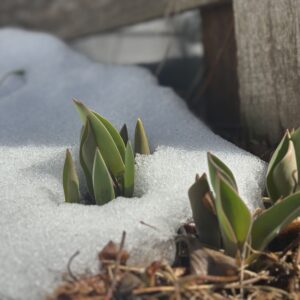
As spring arrives with longer daylight hours, higher temperatures, and less snow on the ground, gardeners and farmers across Wisconsin have already been planning for the upcoming growing season. The growing season is that time of year when plants tend to thrive; however, changes in spring weather in recent decades have impacted which plants can thrive where.
Sprouting in Spring
The amount of daylight is important for plant growth and development, especially in climates farther north, such as Wisconsin.
March is the month with the largest increase in daylight; much of Wisconsin sees an increase of 1.5 hours. Plants sense the increased daylight, which serves as a cue for them to release hormones for flowering and fruiting through a physiological process called photoperiodism.
The rapid increase in daylight in March is followed by a relatively significant increase in temperatures during the month of April. In fact, the change in the March average temperature to that of April is the largest month-to-month increase across the state.
Knowing What to Plant
A key guide to planting perennial plants is the U.S. Department of Agriculture (USDA) Plant Hardiness Zone Map.
The USDA began creating these maps in 1960 based on the average coldest winter temperatures of a region. This aimed to show which perennial plants were most likely to survive the winters and flourish during the growing season.
The original 1960 map displayed three zones in Wisconsin. Zone 3 stretched across the coldest parts of northwest Wisconsin, where average annual coldest temperatures were between minus 30 and minus 40 degrees. The state’s warmer counties in the south and along Lake Michigan were in Zone 5, with annual average minimum temperatures of 10 and minus 20 degrees.
In 1990, the USDA introduced half-zones, splitting each numerical zone into “a” and “b” subzones for more precise mapping.
The most recent plant hardiness zone map released in 2023 for the state is quite different from the 1960 version. As winter temperatures have warmed in recent years, Zone 3 has now receded from Wisconsin. The average annual coldest temperatures in northwestern Wisconsin are now between minus 25 and minus 30 degrees, making the region a 4a planting zone. Lakeshore areas in southeast counties have warmed into Zone 6a, with an average annual minimum temperature between minus 5 and minus 10 degrees.
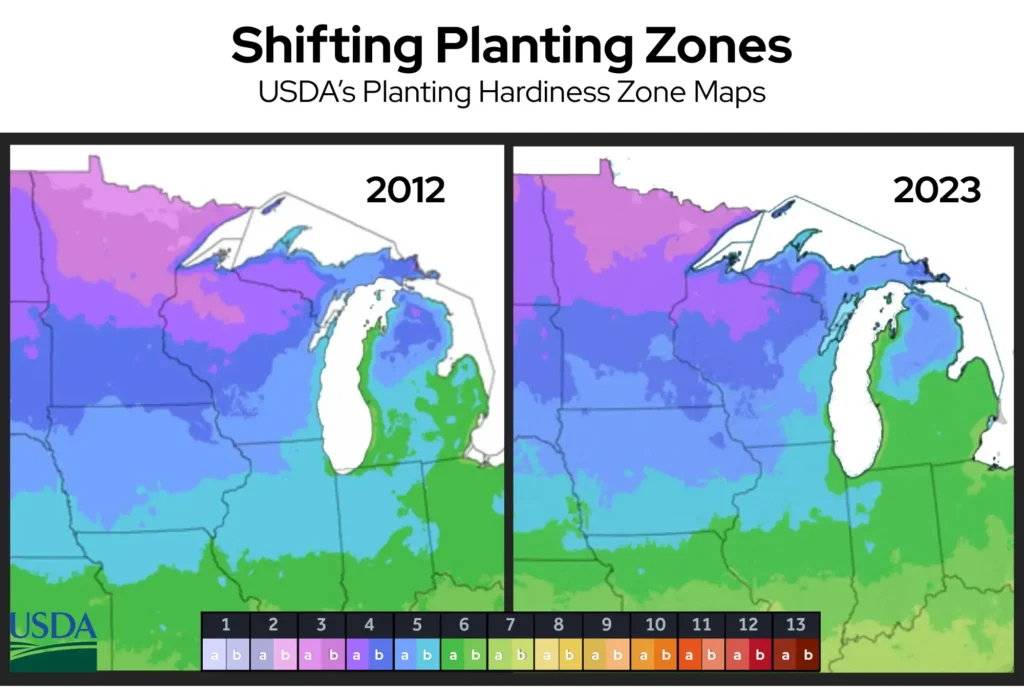
With these changes, plants such as weigelas and alliums can now thrive in northern Wisconsin, while species of cold-season trees may struggle in the now-warmer southeast.
Knowing When to Plant
Gardeners and farmers need to wait until the final freeze of the season has passed before planting. If some seedlings and plants are exposed to temperatures colder than 30 degrees, they may die or be severely damaged.
Freezing conditions typically come to an end in far southern Wisconsin in late April, but persist in northern Wisconsin through mid to late May. The Midwestern Regional Climate Center has created an interactive Freeze Date Tool using data from 1950 onward at numerous stations across the Upper Midwest. This tool provides a long-term perspective of the frost and freeze conditions found at the county level and how those conditions have changed over the last 70 years.
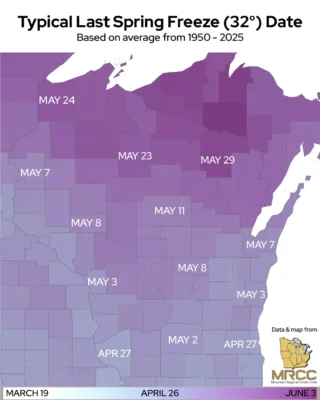
As Wisconsin’s spring seasons have warmed in recent decades, many locations are now seeing freezing conditions end earlier in the season. The last 32-degree temperature in Milwaukee, for example, historically came near the end of April. In more recent years, the final freeze has occurred in mid-April — about a week earlier than usual.
However, this trend does vary by region. Madison has seen the largest shift in the final spring freeze, becoming two weeks earlier. Meanwhile, Wausau has only seen an earlier shift of two to three days.
To assist growers with this variability, the Wisconsin State Climatology Office and the National Weather Service Milwaukee Office created a Frost and Freeze Decision Support Tool. This product can help better interpret the frost risk for a specific area on a day-to-day basis. The tool provides more precise information about frost potential by accounting for both the probability of cold temperatures and wind speeds conducive to frost formation.
Growth of the Growing Season
Once the freezing conditions end, the growing season begins and continues until the first fall freeze. The length of the growing season varies by location in the state, with an average season of 160 to 170 days along the southern tier of counties. In contrast, counties along Michigan’s Upper Peninsula have a shorter growing season, ranging between 115 and 130 days.
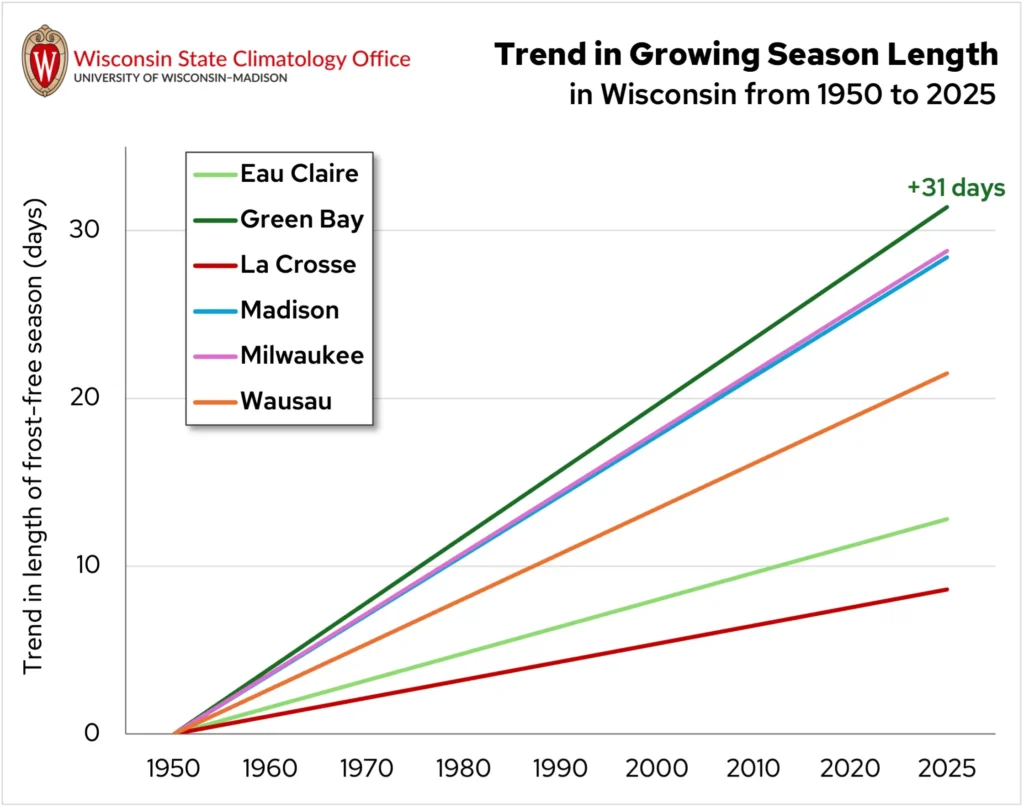
Since 1950, Wisconsin’s growing season has expanded. The frost-free season has changed most significantly in eastern and southern Wisconsin, lengthening by more than 25 days. Smaller changes have been seen in western Wisconsin, where Eau Claire and La Crosse’s growing seasons have lengthened by less than two weeks.
Long-Term Impacts
While a longer growing season can allow for more planting time and the opportunity for new plant varieties, it also presents challenges.
As the frost season ends, pests begin to emerge. An earlier final spring freeze often leads to pests such as mosquitoes, ticks, and aphids appearing sooner than usual. In these longer seasons, pests are able to produce multiple generations. Oftentimes, second and third generation pests exhibit higher tolerance to insecticides compared to earlier generations.
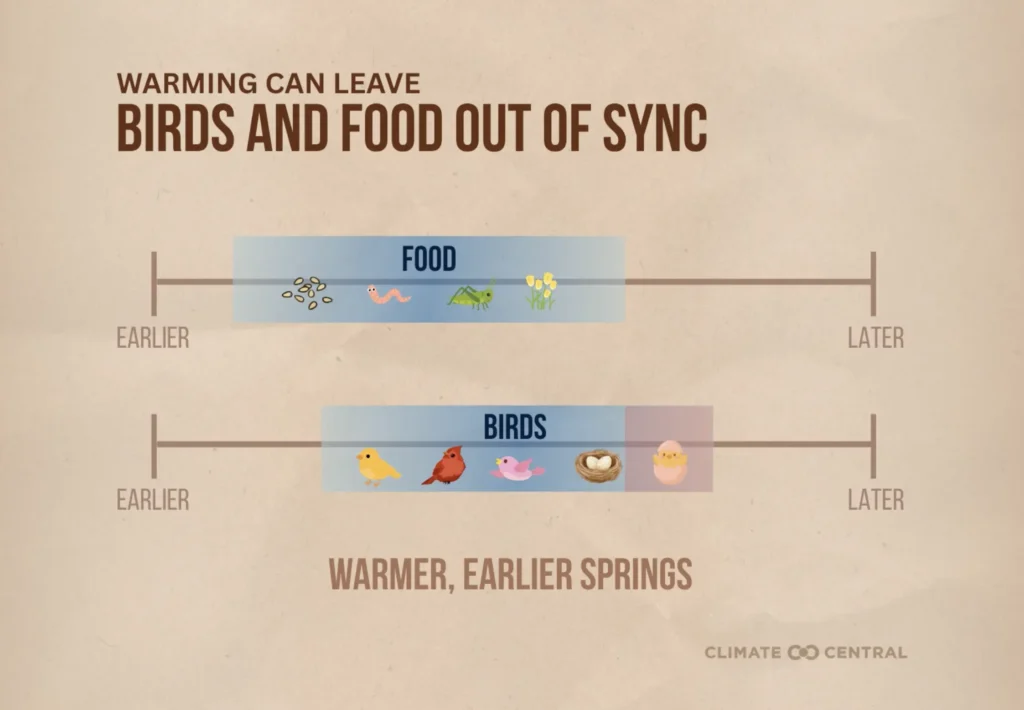
Also, as growing zones change, the location and types of food sources available change with them, leading to phenological mismatches.
For example, as the green-up of spring shifts earlier, birds must shift their migration patterns or risk missing out on the peak of food sources along their routes. On the flip side, migrating too early during a warm stretch in February increases the risk of food sources not being available yet. Pollinators face similar challenges.
For more on how climate change impacts wildlife, visit the Wisconsin Initiative on Climate Change Impacts’ Wildlife Working Group webpage.
This is a product of the Wisconsin State Climatology Office. For questions and comments, please contact us by email (stclim@aos.wisc.edu) or phone (608-263-2374).