Though spring technically begins in March, April is often when it begins to look and feel like spring in Wisconsin. As daffodils bloom and trees leaf out, the state is filled with the sounds of the season as migrating birds and pollinators return. Our April weather, however, can still sprinkle in some hints of winter.
Temperature
The Outlook: To Be Determined
NOAA’s Climate Prediction Center does not see any strong signal for above, below, or near average temperatures for Wisconsin in April. However, the majority of the Lower 48 is likely to see warmer-than-average temperatures, with especially high probabilities in the west and southeast.
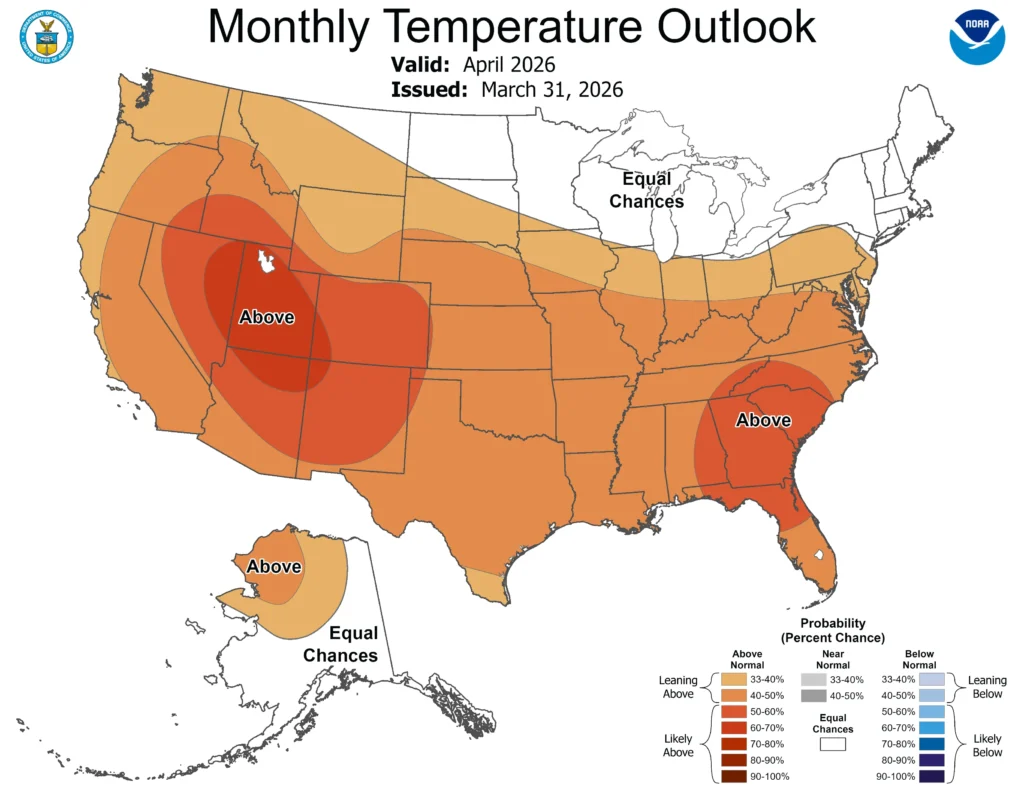
Note that the colors of the above map indicate the probability of above or below average temperatures, not the intensity of the expected warmth or cold. In this case, areas south of Wisconsin in Iowa and Illinois have a 33 to 50 percent chance of above average temperatures during April.
Check out this blog for more information on deciphering climate probabilities.
The Averages:
Though April temperatures can still bring Wisconsinites on a wild ride, winter’s cold generally begins to fade away. Average high temperatures climb through the 50s during the month, though average low temperatures remain near freezing. Overall, the statewide average temperature for April is 43.1 degrees Fahrenheit.
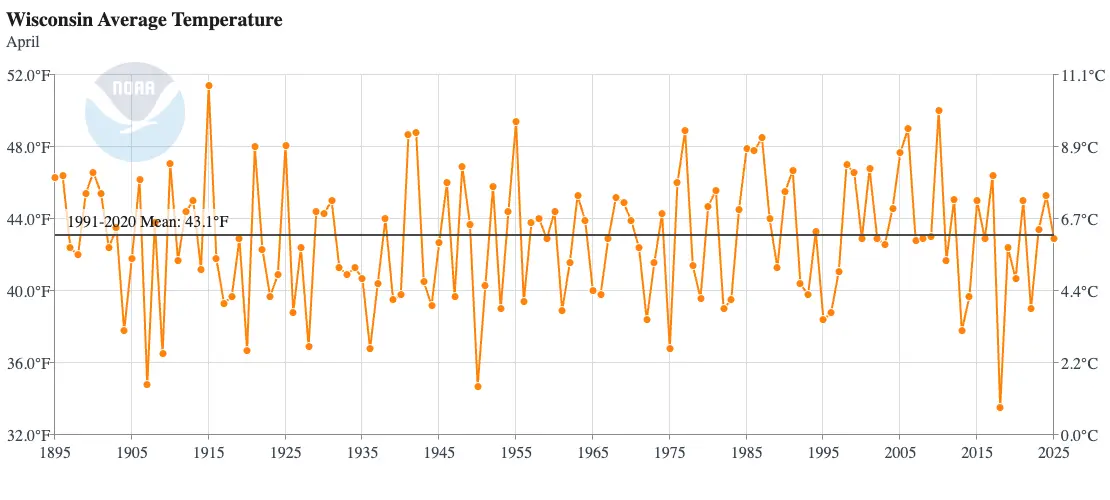
However, sometimes Wisconsin can’t escape winter’s grasp. 2018 was the coldest April on record in the Badger State, with a statewide average temperature of 33.5 degrees — nearly 10 degrees colder than normal! Single-digit and even subzero overnight temperatures persisted through the first week of the month. With a low temperature of nine degrees on April 8, Green Bay recorded its latest single-digit temperature on record.
Wisconsin’s warmest April on record was way back in 1915, when the statewide average temperature was over eight degrees warmer than normal at 51.4 degrees. Interestingly, it was central and northern Wisconsin that felt the most intense heat that month. Hayward in Sawyer County reached a toasty 89 degrees on April 23, and Ashland wasn’t too far behind at 87 degrees on April 24.
Precipitation
The Outlook: Extra Showers
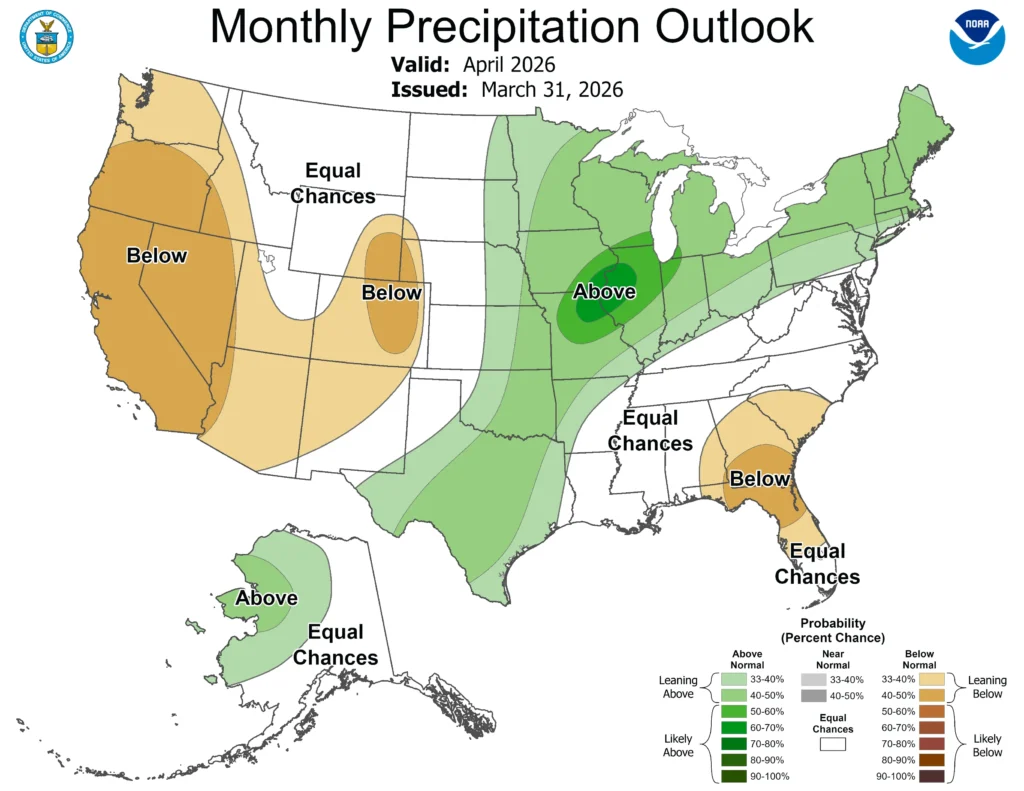
The Climate Prediction Center is forecasting a chance of wetter than average conditions in Wisconsin this month. Probabilities for the majority of the state are leaning wet, while counties along the southern stateline are highlighted as likely to see above average precipitation.
The Averages:
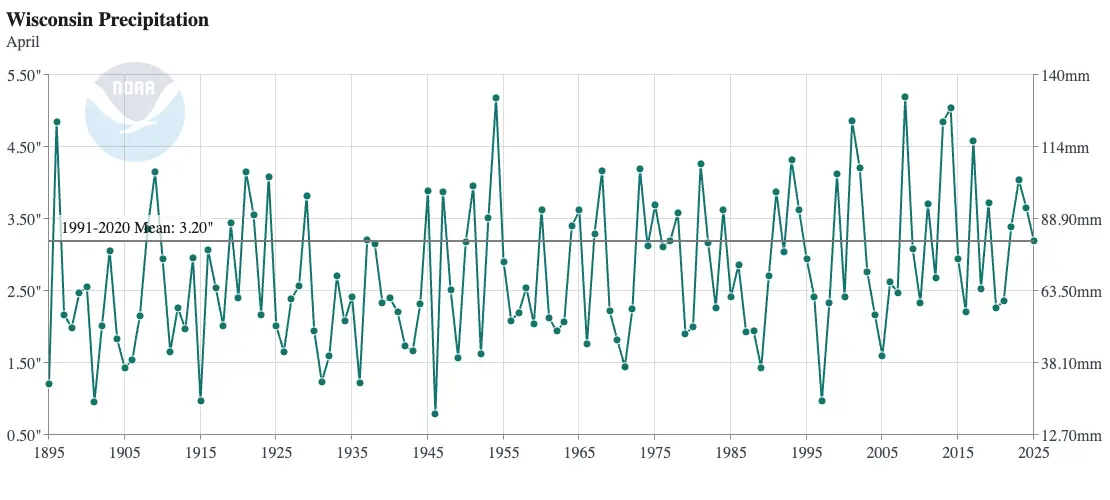
Of course, April showers are supposed to bring May flowers, so it’s no surprise that Wisconsin typically experiences a large increase in precipitation this month. In fact, with a monthly average of 3.2 inches, April is often nearly twice as wet as March.
A key difference between April showers and March showers is how the rainfall is absorbed. As temperatures warm through April, the soil thaws and soaks in the beneficial moisture, whereas March rainfall often runs off the frozen ground and into the streams and drains.
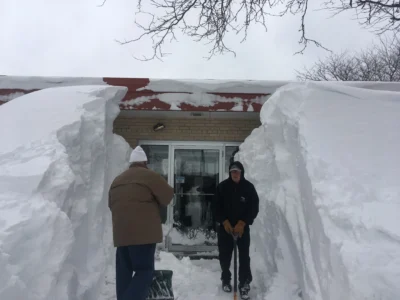
Of course, April can still bring snowfall to the Badger State. It’s common for northern Wisconsin to receive between five and 10 inches of snow during April, while southern Wisconsin typically receives two inches or fewer. Thanks to the unusually cool April of 2018, a historic blizzard dumped more than two feet of snow near Green Bay.
Wisconsin had an abundance of April showers in 2008, with statewide average precipitation at 5.19 inches. Southwest Wisconsin was particularly drenched, with numerous locations reporting more than seven inches of precipitation for the month.
The driest April on record was in 1946, when less than an inch of precipitation fell across Wisconsin during the whole month. The official statewide average total was 0.79 inches, which is 2.41 inches below normal. Both Rhinelander and Wausau received less than a half inch of precipitation that month. That spring as a whole ranked as Wisconsin’s seventh driest on record.
This is a product of the Wisconsin State Climatology Office. For questions and comments, please contact us by email (stclim@aos.wisc.edu) or phone (608-263-2374).