Despite being the shortest month, February often makes its mark in the weather department! From historic blizzards and ice storms to record heat and tornadoes, it seems the month can throw nearly anything Wisconsin’s way.
Temperature
The Outlook: Still in the Freezer
NOAA’s Climate Prediction Center is forecasting a chance for colder-than-average temperatures this month. So if you were a fan of January’s chill, you may be in luck again this month!
If you’re not loving the cold, it does look like the first week of the month will feature high temperatures that are at least near freezing.
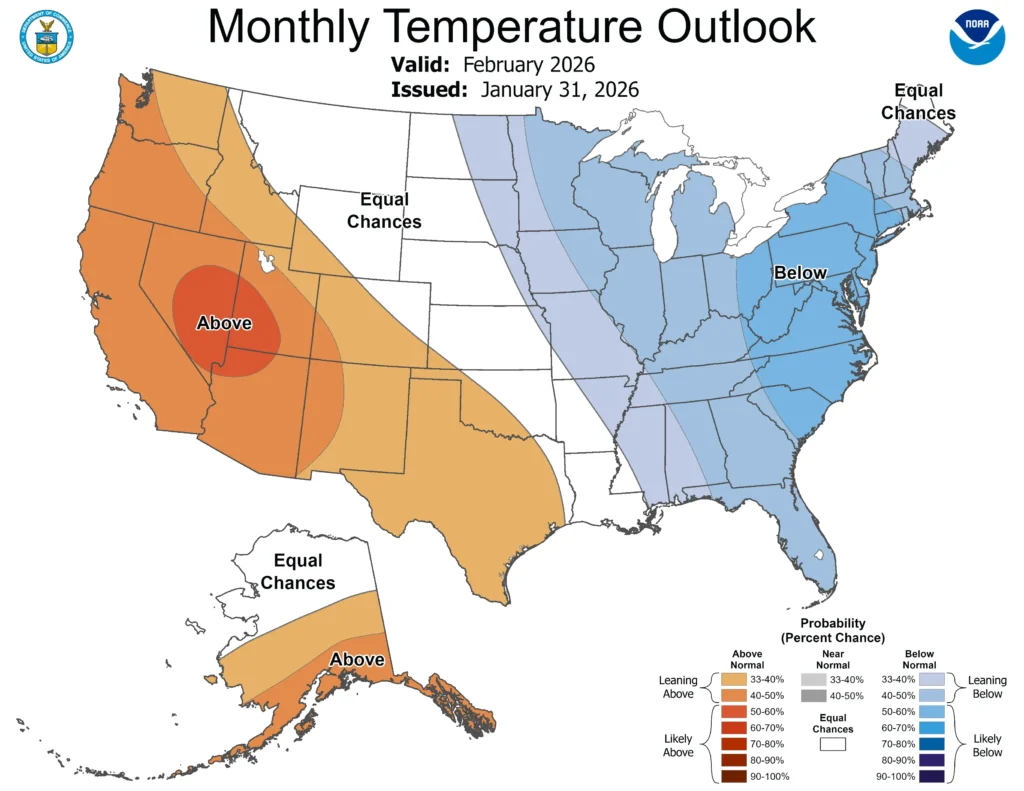
Note that the colors of the above map indicate the probability of above or below average temperatures, not the intensity of the expected warmth or cold. In this case, Wisconsin has a 40 to 50 percent chance of experiencing below-average temperatures.
Check out this blog for more information on deciphering climate probabilities.
The Averages:
Fitting for the second month of the year, February is typically Wisconsin’s second-coldest month. The statewide average temperature is 19.2 degrees Fahrenheit, with average highs typically just below 30 degrees and lows in the single digits.
However, many Februarys in recent decades have been much warmer than average in Wisconsin.
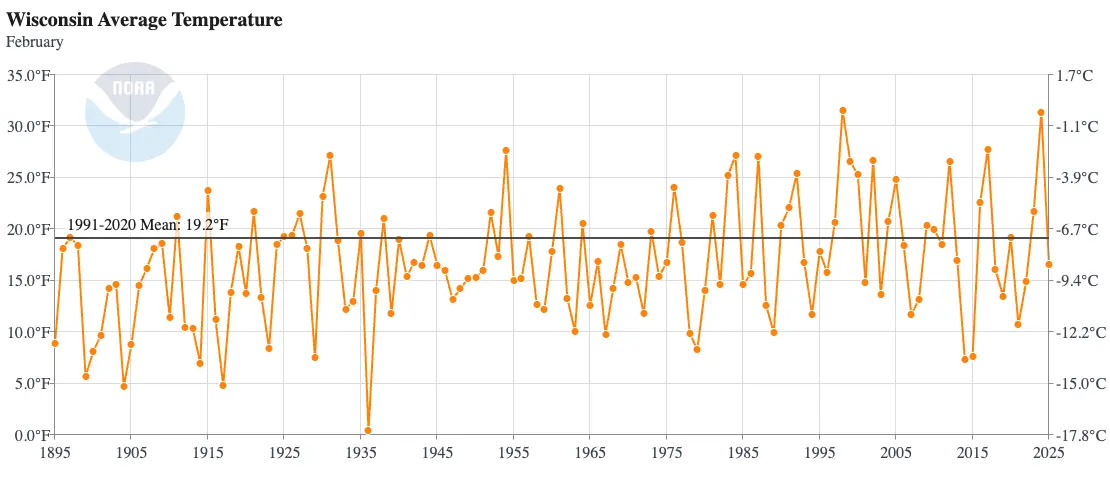
February 1998 is Wisconsin’s warmest on record, with a monthly average temperature of 31.6 degrees Fahrenheit — over 10 degrees warmer than normal. A surge of warmth at the end of that month pushed temperatures into the 60s across southern Wisconsin.
A similar pattern occurred in 2024, resulting in the state’s hottest February temperature. Twenty-seven reporting stations in the state warmed above 72 degrees, Wisconsin’s previous warmest February temperature. Kenosha reached a balmy 77 degrees, marking a new state record. The month as a whole ranked as the Badger State’s second-warmest February.
The state’s coldest February was in 1936, with a statewide average temperature of 0.4 degrees. That’s nearly 20 degrees colder than typical! The average high for the month was just above 10 degrees. To make matters worse, it was a leap year, so the frigid month dragged on for an extra day. The coldest temperature of the month was 52 degrees below zero in Hayward.
Precipitation
The Outlook: To Be Determined
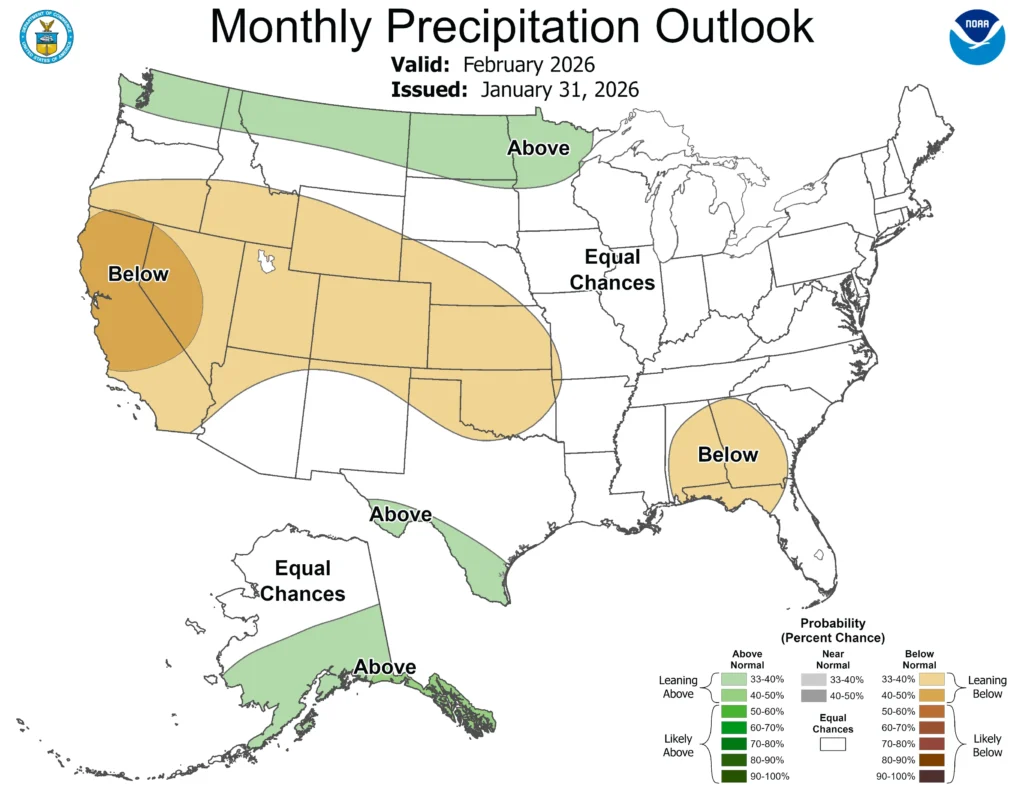
The Climate Prediction Center does not see any strong signals for above, below, or near average precipitation in Wisconsin during February. Portions of northern Minnesota may see wetter-than-average conditions, while the West Coast could begin to dry out.
The Averages:
February is usually Wisconsin’s driest month, averaging just 1.14 inches of precipitation. The majority of the precipitation typically comes frozen, as the state averages 11.5 inches of snow for the month.
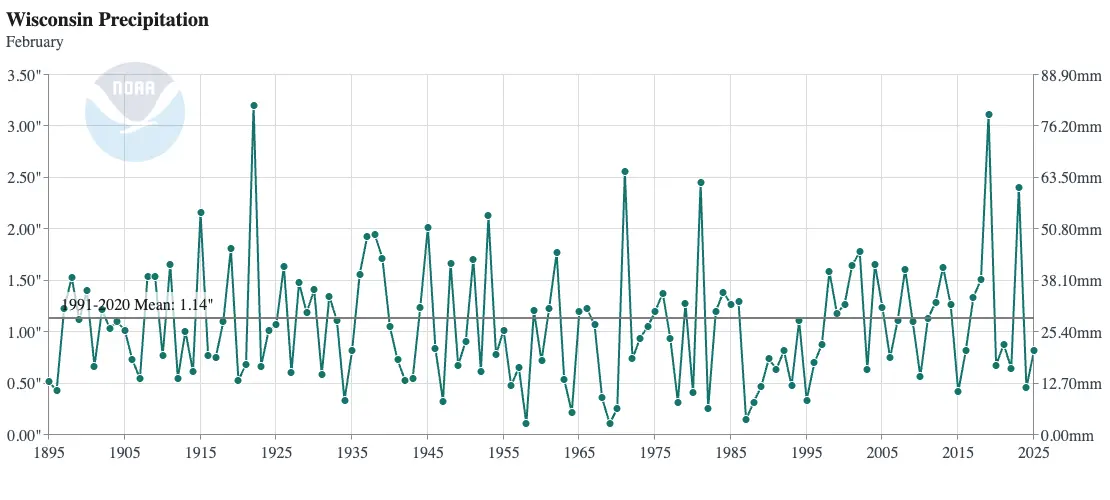
February 1922 was Wisconsin’s wettest, averaging 3.2 inches of precipitation. The northern half of the state bore the brunt of that February, with monthly snow totals of 20 to 30 inches!
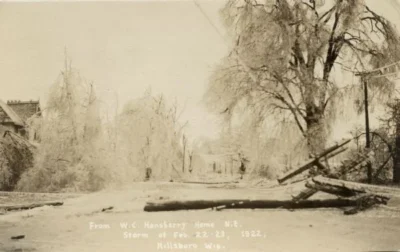
Much of that snow was part of the Great Ice Storm, which brought a foot of snow to Wisconsin’s northern counties and inches of ice to the southern counties.
In 2019, Wisconsin saw a close second-wettest February. Snow totals of 40 to 60 inches buried the west-central and northern counties. Eau Claire accumulated 53.7 inches of snow, the city’s snowiest month on record.
By contrast, 1969 and 1958 both brought remarkably dry Februarys with a statewide average of just 0.11 inches of precipitation. During both months, most of Wisconsin received less than 25 percent of the average February snowfall.
This is a product of the Wisconsin State Climatology Office. For questions and comments, please contact us by email (stclim@aos.wisc.edu) or phone (608-263-2374).