As the remaining autumn leaves fall from the trees, November is often the beginning of the brown and dreary season in Wisconsin. The shorter days become more apparent, cloud cover increases, and a real chill begins to settle over the region. However, the month can still bring pleasant, mild weather, perfect for outdoor activities without the annoyance of bugs!
Temperature
The Outlook: Likely Mild
NOAA’s Climate Prediction Center is forecasting a likely chance of warmer-than-average temperatures across Wisconsin during November. In fact, nearly the entire Lower 48 could see a mild November. The last three Novembers have been warmer than average across the United States.
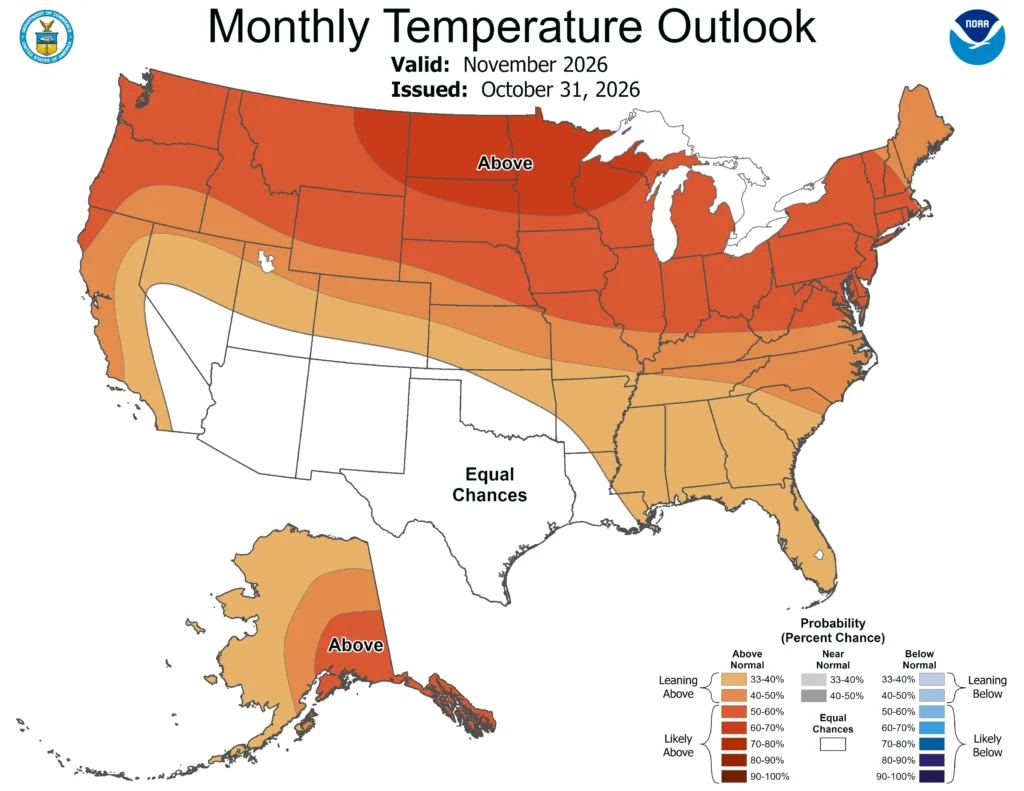
Note that the colors of the above map indicate the probability of above, below, or near-normal temperatures, not the intensity of the expected warmth or cold. In this case, most of Wisconsin has a 50 to 60 percent chance of above-average temperatures in November. The northwestern region of the state has an even higher likelihood, at 60 to 70 percent.
Check out this blog for more information on deciphering climate probabilities.
The Averages:
Wisconsin’s average temperature in November is just barely above freezing, at 33.4 degrees Fahrenheit. As temperatures get colder through the month, the waters of some smaller lakes often freeze over, including Madison’s Lake Wingra.
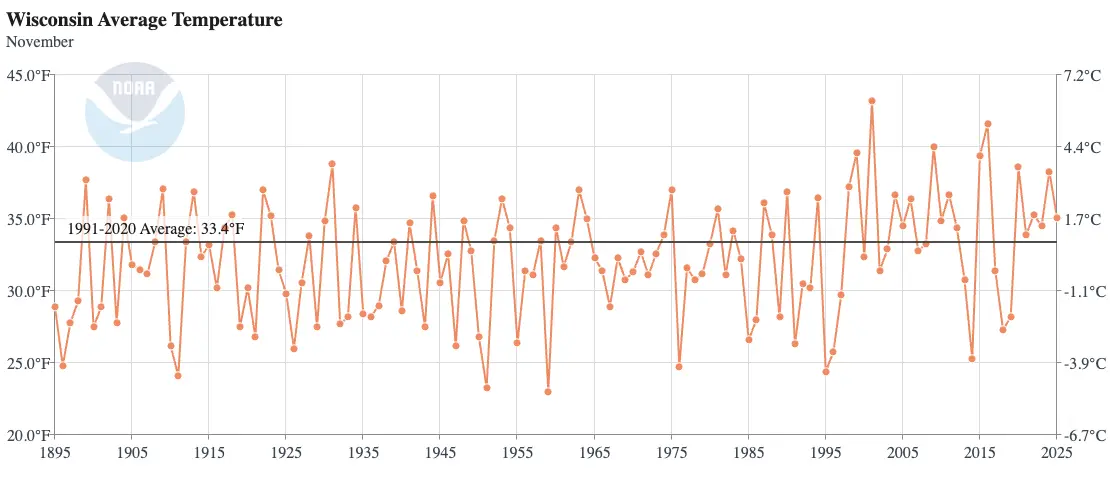
The coldest November on record in Wisconsin was in 1959, when the statewide average temperature was just 23 degrees! Locations in the northwest and west-central regions reported sub-zero temperatures as cold as 11 below zero! The Madison area even dropped to one below on November 17, 1959 — the capital city’s earliest sub-zero temperature on record.
You may recall the warmest November in 2001, when 70-degree temperatures stuck around through the middle of the month. The state’s average high temperature for that month was a balmy 52.7 degrees.
Precipitation
The Outlook: Possibly Wet
The Climate Prediction Center expects chances of wetter-than-average conditions for western Wisconsin this month. While only a 40 percent chance at best, this could be promising for the northwest region where exceptional drought has expanded in recent months.
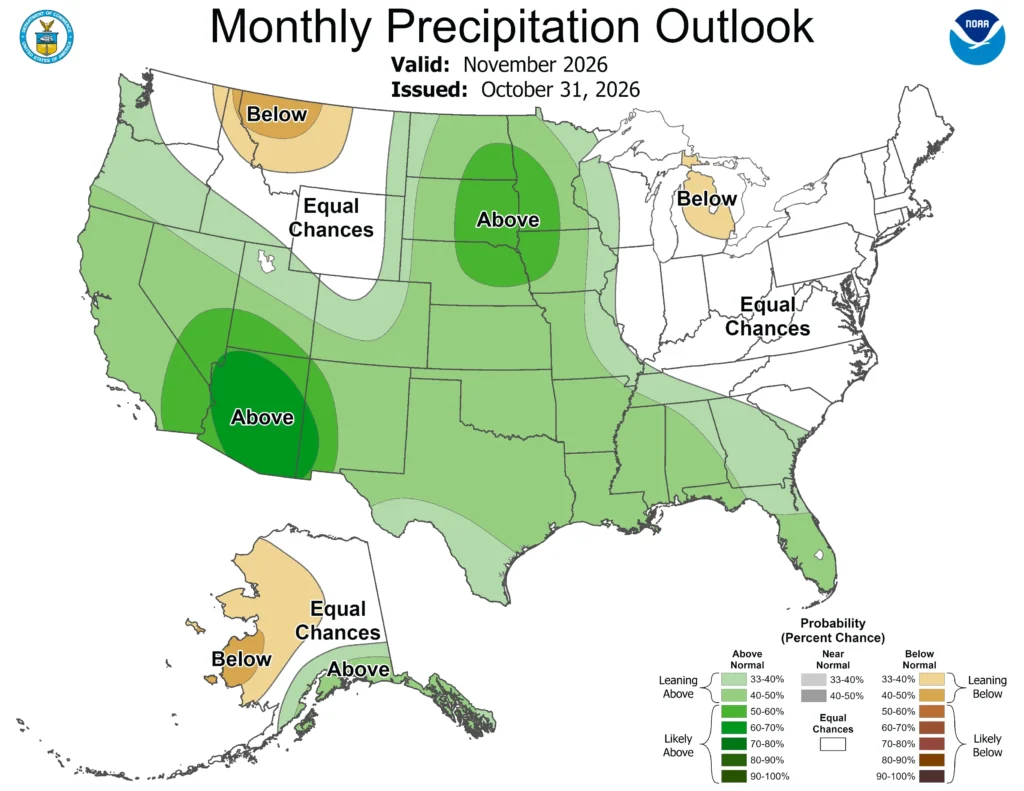
The likelihood of soggy conditions increases farther west, near the Central Plains. Unfortunately, Arizona is also highlighted as having a high chance of wetter-than-average conditions, where recent flooding has already caused landslides and forced evacuations.
The Averages:
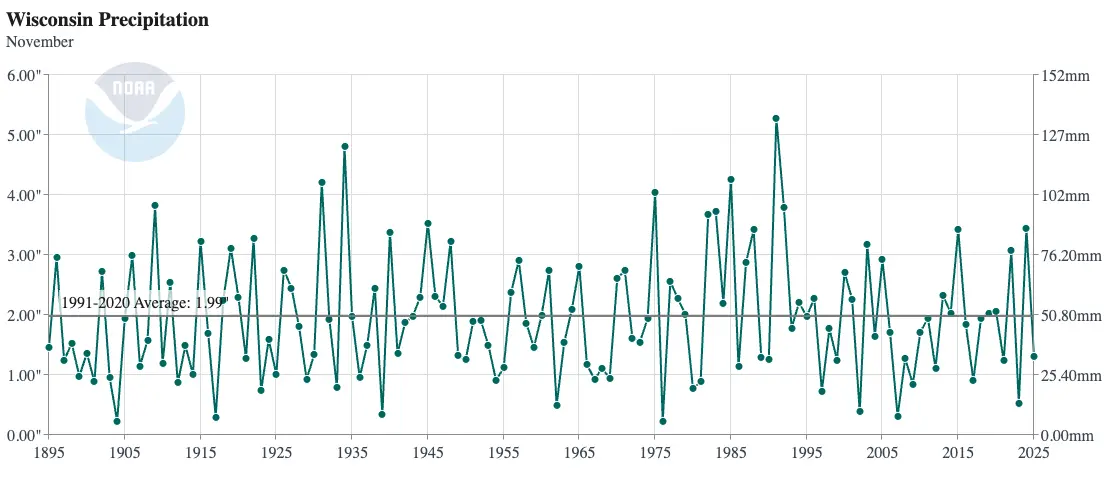
November in Wisconsin is typically significantly drier than October, averaging under two inches of precipitation.
Frozen precipitation (snow and sleet) becomes more and more likely as the November days go on. The National Centers for Environmental Information does not track snowfall, but rather the liquid equivalent of precipitation. For example, if two inches of snow fell into a jar and melted, the amount of liquid in the jar is what would be reported.
Many locations see their first inch of snow by the end of November, though some farther south may have to wait until early December. Find the average first snow for your location using the Midwestern Regional Climate Center’s Snowfall Climatology Toolbox.
Wisconsin’s wettest November was in 1991, and that’s largely thanks to snowstorms bookending the month.
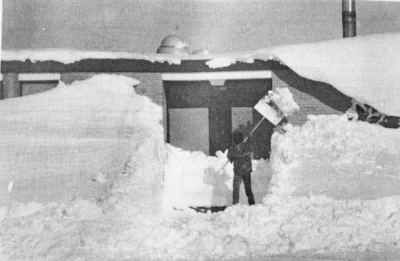
The Halloween Blizzard started the month, and while the snowstorm had a larger impact on Minnesota, the edge of the storm still managed to dump more than 20 inches of snow in parts of northwest Wisconsin!
A late-month snowstorm dropped an additional 12-plus inches in the western counties. By November 30, the city of Hurley in Iron County had received nearly 60 inches of snow!
The Novembers of 1904 and 1976 were Wisconsin’s driest, with an average of only 0.23 inches of precipitation in the state. During November 1976, La Crosse didn’t report any measurable precipitation, and Wausau only recorded 0.2 inches.
This is a product of the Wisconsin State Climatology Office. For questions and comments, please contact us by email (stclim@aos.wisc.edu) or by phone (608-263-2374).